Responsive Banner Design

What is an Insider Threat?

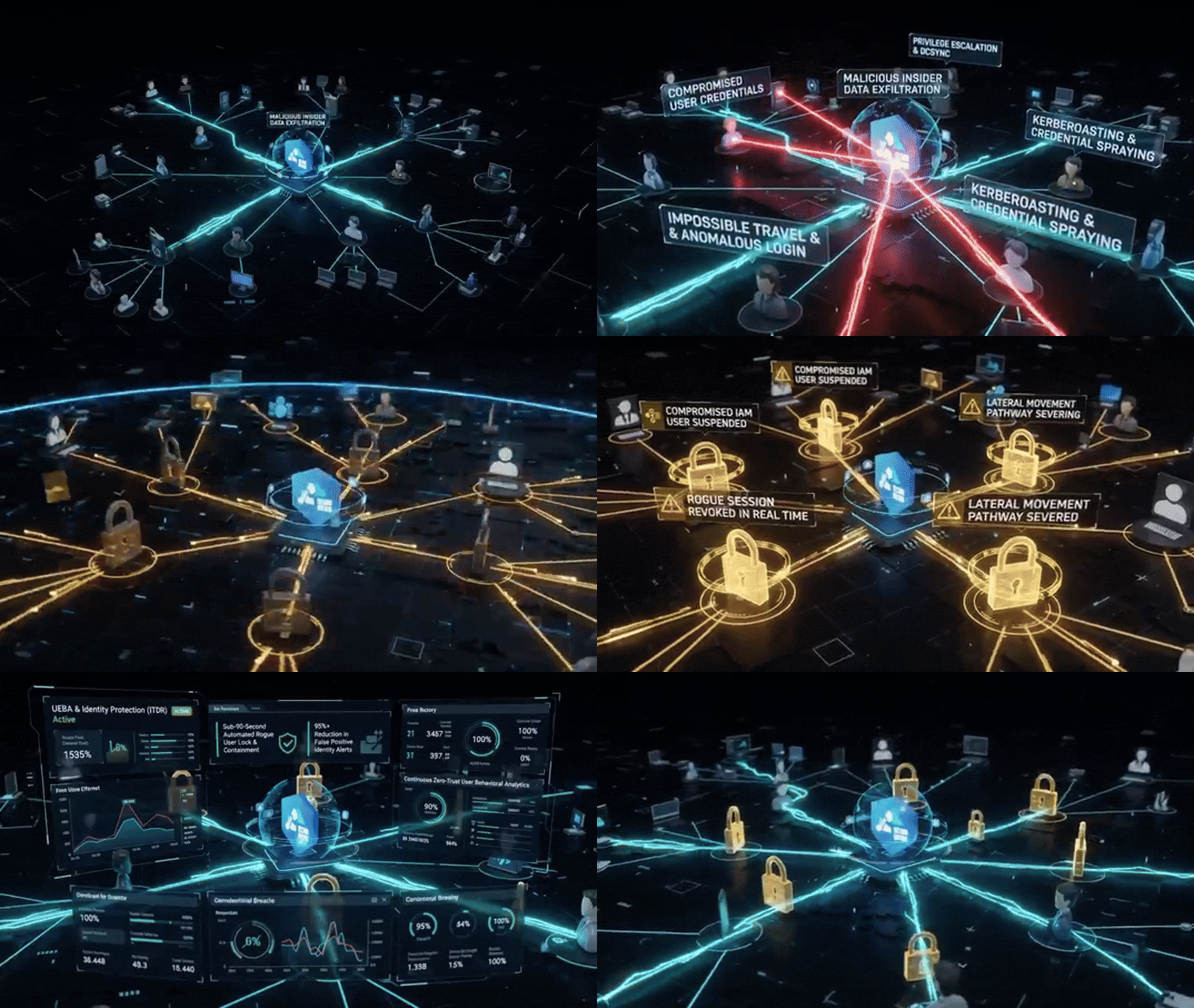
Insider threat detection involves identifying, monitoring, and mitigating risks posed by individuals within an organization who may become threats, whether intentionally or unintentionally. These insiders employees, contractors, or partners have access to sensitive data, systems, and physical spaces.
The risks are significant: while access to private information, business-sensitive data, and intellectual property (like patents or source code) may be necessary for certain roles, any unauthorized sharing or misuse can cause substantial financial and reputational damage. Disgruntled employees may go further, stealing credentials, leaking confidential information, or even destroying critical data, potentially crippling the organization.
The Ponemon Institute’s 2023 Cost of Insider Threats Global Report highlights the growing danger: the average cost of an insider threat incident has surged to $15.38 million, a 31% increase over two years, with incident frequency up by 47%. As insider threats become more common, robust detection and prevention are more critical than ever.

Challenges of Cloud Security

Privacy & Security

Ensuring that monitoring respects employee privacy rights and maintains compliance with legal and ethical standards.

Sophisticated threats

Dealing with insiders who are knowledgeable about the organization’s security measures and know how to evade detection.

False Positives

Insider threat cannot be pre-determined and controlled through policies due to the ad hoc nature leading to a number of false positives and alert fatigue.

Seceon aiSecurity UIDGuard360

One person, 20 to 40 accounts. Seen as one identity.

Unify every identity fragment, baseline behavior across all of them, and contain insider and credential threats in under 90 seconds.

Identity discovery

Every account, one unified profile

Agentless discovery across 60+ platforms, with patent-pending fuzzy matching that links username variations to the same person.

Illustrative example, based on the username variations in the datasheet.

60+Platforms discovered
98%+Correlation accuracy
7 daysTo a unified baseline

Identity threat detection

Impossible travel

99%+ accuracy across any combination of platforms, using the unified profile.

Privilege escalation chains

Escalation across platforms

Aggregate exfiltration

Small pieces, one theft

Adds up data access across SaaS apps that each look normal on their own.

Peer group analytics

Normal for whom?

Compares each user against role-based peers to catch behavior that looks normal for the individual but not for the job.

Role-based peersSeasonal patterns

Built-in alerts

Insider and credential detections, ready to use

Automated response

<90s

Contain everywhere at once

With rollback if a false positive is confirmed.

Non-human identities

Service accounts and API keys, too

Tracks service accounts, API keys, machine and workload identities, RPA bots and IoT/OT accounts. Orphaned accounts are detected within 24 hours, and service accounts are linked to their owning human.

Interactive service account loginsAPI key misuseOrphaned accounts

HR context and audit

Know who should have access, and prove what happened

HR integration adds job title, manager chain and lifecycle events such as onboarding, offboarding and role change. Every action is logged in an immutable audit trail.

WorkdaySAP HCMOracle HCMImmutable audit trail

Insider and Credential Breaches FAQs

Learn how unified identity visibility, behavioral analytics, and automated response help organizations detect insider threats and compromised credentials and contain them quickly with Seceon.

How can organizations detect insider threats and compromised credentials before a data breach happens?

Insider threats and compromised credentials are difficult to catch because the activity often comes from valid accounts with legitimate access. Organizations can improve detection by baselining normal behavior for each user, monitoring logins, privilege changes, account creation, and data access across systems, and alerting when activity deviates from that baseline or from the behavior of similar roles.

Seceon approaches this with aiSecurity UIDGuard360 for identity security, together with aiSIEM and aiXDR on the OTM Platform. Built-in alerts cover Compromised Credentials, Insider Threat, Suspicious Login, Suspicious Account Creation, and USB Copy activity, and Seceon's Bruteforce Prevention use case addresses credential-based attacks. Detection effectiveness depends on the log and identity sources connected and on how the environment is configured.

What are the best insider threat detection tools for enterprises in 2026?

The best insider threat detection tool depends on an organization's identity landscape, regulatory requirements, and security team capacity. Enterprises should evaluate tools based on identity coverage across cloud, SaaS, and on-premises systems, behavioral baselining, peer group comparison, false-positive management, privacy and audit controls, and the ability to respond automatically when a threat is confirmed.

Seceon is an option for organizations that want insider and credential threat detection combined with SIEM, XDR, and automated response in one platform. aiSecurity UIDGuard360 unifies identities and detects identity-based threats, aiSIEM and aiXDR add event correlation and endpoint response, and aiCompliance CMX360 supports compliance and controls management. Seceon also offers 24/7 access to its cybersecurity experts. Enterprises should confirm supported platforms, integrations, and deployment requirements against their own environment before selecting a tool.

How can I detect impossible travel and privilege escalation across cloud and SaaS accounts?

Impossible travel occurs when the same identity logs in from locations that cannot be reached in the time between sign-ins. Privilege escalation across platforms can occur when a standard user assumes a cloud role and then gains administrative rights elsewhere. Both are hard to see when each platform is reviewed separately, so detection usually requires correlating sign-ins and role changes into a single identity view.

Seceon's aiSecurity UIDGuard360 uses a unified identity profile to detect impossible travel across any combination of platforms, with Seceon citing 99%+ accuracy, and to identify privilege escalation chains such as a standard Active Directory user assuming an AWS role and reaching Azure Global Admin. For cloud-specific monitoring, Seceon also offers Cloud Security through aiSIEM-CGuard. Actual results depend on the data sources connected and the configuration of each deployment.

How can security teams link one employee's accounts across Active Directory, Okta, AWS, and SaaS apps into a single identity?

A single person can hold dozens of accounts, often with different usernames in each system, such as a directory login, an SSO account, a cloud IAM user, and a service account. Unless these fragments are linked, behavioral baselines and alerts are built per account and miss the full picture. Teams typically use identity discovery and matching techniques, often enriched with HR data, to connect username variations to the same individual.

Seceon's aiSecurity UIDGuard360 uses agentless discovery across 60+ platforms and patent-pending fuzzy matching to link username variations to one person, with Seceon citing 98%+ correlation accuracy and a unified baseline in about 7 days. HR integrations with Workday, SAP HCM, and Oracle HCM add job title, manager chain, and lifecycle events such as onboarding, offboarding, and role change. Timelines and accuracy vary by environment.

How can insider threat detection reduce false positives and catch low-and-slow data theft?

Insider activity cannot be fully predefined by policy, so rule-only approaches tend to produce many false positives and alert fatigue. Peer group analytics help by comparing a user against others in similar roles, which separates behavior that is normal for the job from behavior that is only normal for the individual. Aggregating access across applications also helps reveal data theft that is split into small pieces, each of which looks harmless alone.

Seceon's peer group analytics compare each user against role-based peers and seasonal patterns, and its aggregate exfiltration detection adds up data access across SaaS apps that each look normal on their own, for example a large volume of data moved in small amounts across many applications. Seceon also maintains a dedicated Data Exfiltration use case for suspicious movement and theft of sensitive data. False-positive reduction depends on data quality, tuning, and the organization's own environment.

How can organizations automatically contain compromised accounts, insider threats, and misused service accounts?

Fast containment is critical because a compromised or malicious account can move quickly across systems. Effective response usually means acting on every account tied to the identity at once, revoking active tokens, blocking suspicious source IPs, and isolating affected endpoints, with the ability to roll actions back if an alert turns out to be a false positive. Non-human identities such as service accounts and API keys also need monitoring, and an audit trail should record every action taken.

Seceon's automated response can suspend all identity fragments, revoke OAuth, SAML, JWT, and Kerberos tokens, block source IPs on VPN, cloud, and firewalls, and isolate endpoints through EDR with aiXDR, with rollback if a false positive is confirmed. Seceon positions containment at under 90 seconds. aiSecurity UIDGuard360 also tracks service accounts, API keys, machine and workload identities, and orphaned accounts (detected within 24 hours), links service accounts to their owning human, and keeps an immutable audit trail. Available actions and response times depend on the integrations and automation settings in each deployment.

Summary Section

Summary

Seceon’s AI-powered solution detects and prevents insider threats by monitoring user behavior, identifying anomalous activities in real-time, and automatically responding to suspicious actions, ensuring robust protection against internal security breaches.

Seceon aiSIEM-CGuard

24/7 Access to Seceon’s Cybersecurity Experts - Because Threats Don’t Wait

Do These Persistent Issues Impact Your Day-to-Day Operations?
  • Large number of failed logins from single/multiple IPs, internal or external, against a single/multiple usernames.
  • Failed logins from new geo locations or a new user device.
  • Large number of account lockouts.
  • High cost of integration, support and maintenance.

    wpChatIcon
    wpChatIcon